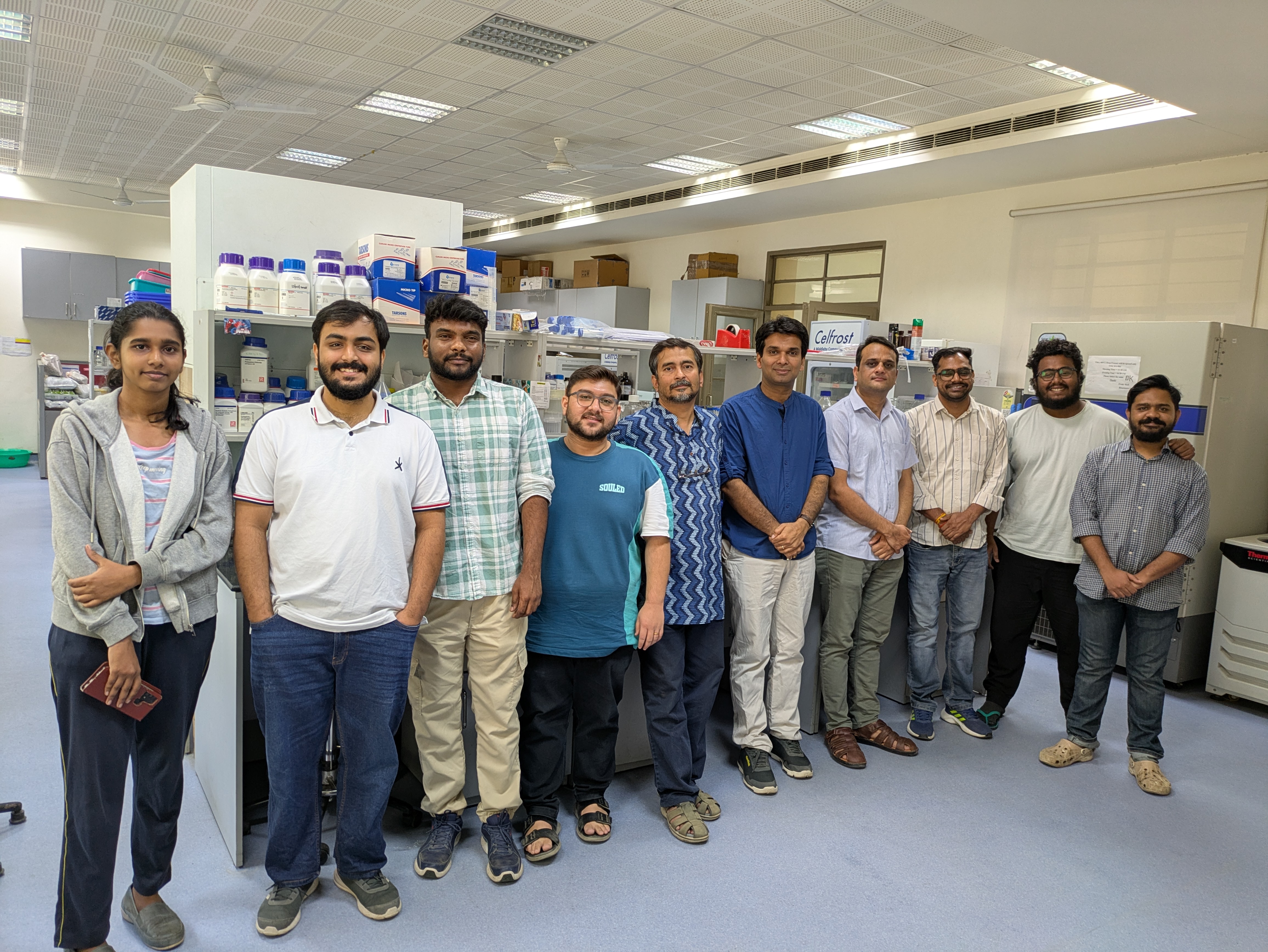
We congratulate Professor Syamantak Majumder, Department of Biological Sciences, Birla Institute of Technology and Sciences (BITS), Pilani Campus, and his research team for their recent publication in Nature Communications (Published on 27th April 2025), titled "S-nitrosylation of EZH2 alters PRC2 assembly, methyltransferase activity, and EZH2 stability to maintain endothelial homeostasis." The groundbreaking study from Prof. Majumder’s laboratory, conducted in collaboration with Ashima Sakhuja, Ritobrata Bhattacharyya, Yash Tushar Katakia, Shyam Kumar Ramakrishnan, Srinjoy Chakraborty, Hariharan Jayakumar, Shailesh Mani Tripathi, Niyati Pandya Thakkar, Sumukh Thakar, Prof. Sandeep Sundriyal, and Prof. Shibasish Chowdhury.
Nature Communications is a highly reputable journal with an impact factor of 14.7 and an h-index of 577, underscoring its significance in the scientific community. The study has revealed significant findings about nitric oxide, a gaseous molecule naturally synthesized by the human body that plays a key role in heart health. Known for its cardio-protective effects, nitric oxide has now been shown to help blood vessel cells adapt to stress by regulating important cellular processes. The study highlights how nitric oxide affects nuclear epigenetic processes through EZH2, a protein part of the Polycomb repressive complex. This regulation helps maintain the health and function of blood vessels, especially under stress conditions. The findings are a major step forward in understanding how our body manages vascular health and could have long-term implications for treating cardiovascular diseases. The research is now accessible to the global scientific community at https://doi.org/10.1038/s41467-025-59003-x, opening doors for further exploration and potential therapies. This work not only deepens our understanding of cellular processes but also has the potential to impact treatments for cardiovascular diseases, benefiting society at large.



 LibraBot