The library is temporarily closed and is scheduled to resume services at 06:00 AM
Thursday:
06:00 AM - 06:00 PM
Friday:
06:00 AM - 06:00 PM
Saturday:
09:00 AM - 05:00 PM


BITS Email Login
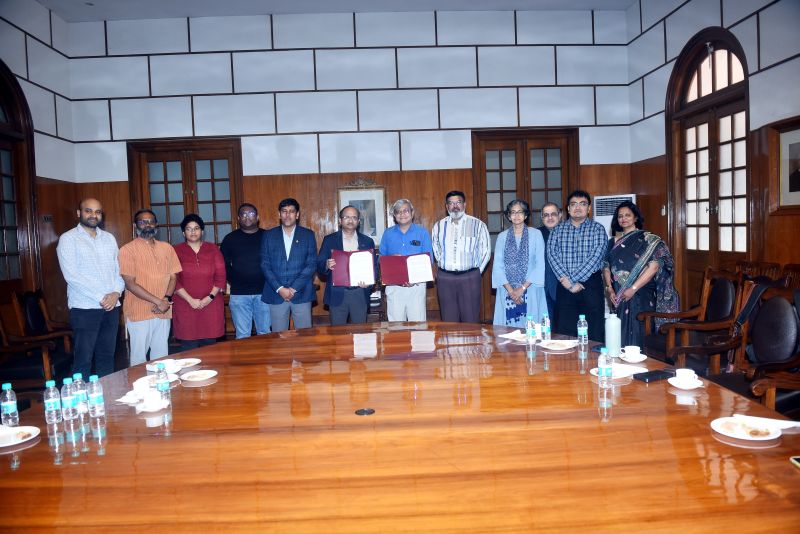
India’s scientific awakening has always been a collective journey. From royal patronage to industrial vision and institution building, it has been powered by collaborations rooted in shared purpose
Here are some connections of Pilani with IISc. It was Maharaja 𝗔𝗷𝗶𝘁 𝗦𝗶𝗻𝗴𝗵 of Khetri (a place 50kms from Pilani) in Rajasthan who first believed in this vision. He hosted 𝗦𝘄𝗮𝗺𝗶 𝗩𝗶𝘃𝗲𝗸𝗮𝗻𝗮𝗻𝗱𝗮 in Khetri, suggested the name “Vivekananda,” and funded his passage to the Parliament of the World’s Religions in Chicago in 1893. It was on that voyage that Vivekananda inspired 𝗝. 𝗡. 𝗧𝗮𝘁𝗮 with the idea of a world-class science institute for India, which would eventually become Indian Institute of Science (IISc). Of course, IISc could not have come into existence in that time frame without the contributions of 𝐌𝐲𝐬𝐨𝐫𝐞 𝐌𝐚𝐡𝐚𝐫𝐚𝐣𝐚 𝐒𝐡𝐫𝐢 𝐊𝐫𝐢𝐬𝐡𝐧𝐚𝐫𝐚𝐣𝐚 𝐖𝐚𝐝𝐢𝐲𝐚𝐫 𝐈𝐕 in the form of land and funding.
Later, the Birla family stepped in to support 𝗖. 𝗩. 𝗥𝗮𝗺𝗮𝗻’s pioneering research. A letter from Dr. C V Raman to Shri 𝗚. 𝗗. 𝗕𝗶𝗿𝗹𝗮 helped secure funding for the spectrograph that enabled the discovery of what is now called the Raman Effect. That partnership led to India’s first 𝗡𝗼𝗯𝗲𝗹 𝗣𝗿𝗶𝘇𝗲 in physics in 1930, which helped shape IISc’s future.
Today, 𝗕𝗜𝗧𝗦 𝗣𝗶𝗹𝗮𝗻𝗶 continues this lineage of impact and influence. Along with IIT Kanpur, we are one of only two institutions to have produced two directors of IISc. It is a point of institutional pride and a testament to our commitment to nurturing leaders in higher education.
Our collaborative hashtag#MoU with IISc builds on this rich heritage. Joint research projects, shared research infrastructure, mobility of faculty and students, which are not just initiatives, these are continuations of a century‑long Tata‑Birla partnership for nation‑building.
When institutions work together with clear vision, India doesn’t just compete, it leads. That is the big picture we at BITS Pilani are committed to driving forward.

Online
 LibraBot