Library is open currently
Opening Time: 06:00 AM
Closing Time: 06:00 PM
Thursday:
06:00 AM - 06:00 PM
Friday:
06:00 AM - 06:00 PM
Saturday:
09:00 AM - 05:00 PM


BITS Email Login
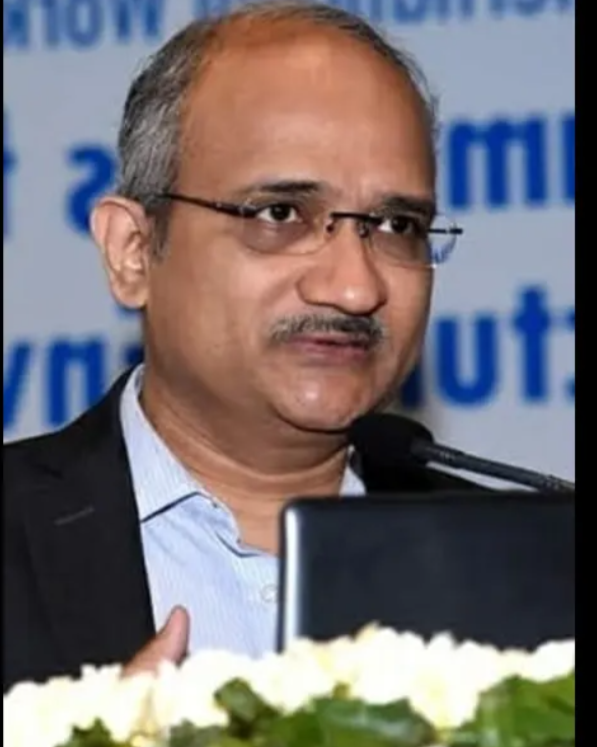
n the recently announced NIRF rankings of higher education institutes, BITS Pilani entered the club of top 10 universities for the first time, securing 7th rank. Its Pharmacy Department was ranked 2nd, a jump of one rank from 2024. Engineering programme, with which BITS has been synonymous, jumped from 20th to 11th rank, claiming the top spot among private engineering institutes. The overall rank of BITS Pilani improved from 23rd to 16th. Prof Ramgopal Rao, Vice Chancellor, BITS Pilani, ponders over the 2025 rankings, and areas of improvement. Excerpts:
What has gone into making BITS Pilani a leading engineering college over the decades, and how do the legacy factor and innovativeness come together in taking the institute to new heights?
BITS Pilani has shown improvement in almost all the parameters. And the University has seen a significant jump, from 19th to 7th now. In engineering we have improved from 20th to 11th. In pharmacy we are 2nd in the country. One of the parameters that has really improved in BITS is research focus. Supporting research infrastructure and PhD students is very expensive, but in the last few years, we have invested significantly in research. We have 2,500 PhD students and for each student we pay DST specified scholarship, and allow them to travel abroad, through institute provided travel grants. Our budgets are growing at 18 per cent each year because if the investments we are making in research. We are also supported by various Government of India agencies for sponsored research funding. This year we raised over Rs 180 ccrors through sponsored research funding. Till about five years ago, we used to get on an average about Rs 35 crore per year. Now, on an average, we are getting Rs 90 crore per year. That has also helped us improve the publications, which have a very high weightage in the rankings. Our patents have grown by almost 500 per cent. We used to file 25-30 patents per year. Last year we filed 176 patents. The acceptance rate for patents today is 99 per cent. In placements, we are growing at the rate of 11 per cent every year. This year, our median salary is 19.2 lakh. In fact, BITS is among the top five institutes in the country in terms of employability. All the parameters are improving, from 11 per cent CAGR to 15 per cent, which is pushing BITS Pilani into top 10 in many of the rankings.
Our perception rate hasn’t improved, unfortunately. We have a huge scope for improvement.
How is industry exposure ensured in various programmes at BITS Pilani?
We have a unique ‘practice school’ concept. Every student goes for two internships, called practice school 1 and 2 respectively. Practice school 1 is for two-months, during summers, and practice school 2 is of full semester. Every student spends about 7 to 8 months in paid internship, and our average stipend is Rs 50,000. Last year, students earned Rs 120 crore in total during internships. We have about 500 industries as ‘practice school stations’. We also have work integrated learning programmes. There are 49,000 working professionals, working in 500 industries, registered for degrees with us. We have strong industry connects also thanks to the Aditya Birla Group, whose chairman Kumar Mangalam Birla is BITS Pilani chancellor.
Coming to NIRF rankings, what needs to change and what can be done better in the rankings?
NIRF is evolving. In the last 10 years they have definitely come quite far. But they can still improve. One of the major areas is perception. Perception is like a black box. You don’t know why some institutions are scoring less or high. Some new institutions which have nothing to talk about end up scoring very high and legacy institutions find themselves scoring far less. I have been suggesting that for perception, the NIRF should engage with academies, especially leading academies in sciences and engineering. They should also start talking to industry, especially organisations that are recruiting from these campuses.
One positive development is introduction of research integrity index. If you plot the graph between number of publications and citations, it is linear curve. Because it is linear, you are double-counting the same parameter. Institutions which have more publications also have more citations. In many institutes, one person writes a paper and asks 10 persons from that institute to cite that. That is what many private institutes are doing. Therefore, there is a correction required for engineered citations.
The data provided by institutes needs to be made public, for NIRF to be more transparent.
The other big challenge in present in present AI times is the need to change pedagogy. How is BITS Pilani addressing this need?
AI is present everywhere. We don’t even see AI as an independent discipline. We don’t have an undergraduate programme in AI in our campuses right now, though we have such programs offered online. We teach AI as minor, and that every student can take up. You need AI as a civil engineer, or a biologist or a mechanical engineer. It is a platform technology that every student from every discipline will have to take.
We have undertaken major curriculum revamp in BITS, and in first year itself, students will learn about AI tools – both the scientific aspect and the usage part of it. And we have an entirely new AI+ campus coming up in Amravati. We are also looking at using AI in all aspects of administration, pedagogy, evaluations, student welfare and student feedback. An institute level committee is looking at the implementation aspects.
But concerns have been raised about core disciplines like civil and mechanical finding fewer takers and some universities even closing these programmes for students. What is your take on this?
The concern is very valid. The problem is job situation in these disciplines. Even if the jobs are available, the salaries are very low. Students look for jobs which are high paying. That is the reason that computer science and semi- conductors are popular.
The core disciplines are also stuck in time. The way these are taught today are how these were taught 30 years ago is similar. Students have lost interest because these disciplines have not evolved with time. As part of our curriculum revamp, we are taking a fresh look at the core disciplinary programmes. For example, civil engineering also has environmental aspects integrated into it. Chemical engineering is all about industry 4.0 and electrical and electronics is about semiconductors now. These are the kinds of things engineering institutes need to introduce. This evolution is important.
To further encourage innovation and entrepreneurship, we have launched two flagship initiatives. SPARKLE (Student Program for Advancing Research, KnowLedge and Entrepreneurship) provides a platform for students to take up challenge-driven research projects. These projects often lead to prototypes, patents, and in some cases, startups. SOLVE is aimed at nurturing problem-solving skills by engaging students with real-world societal challenges. Students identify pressing problems and develop engineering solutions, many of which can be scaled into impactful ventures. Together, SPARKLE and SOLVE embody our philosophy of ‘learning by doing,’ helping students move seamlessly from problems to projects, papers, patents, prototypes, products and eventually profits.
In the present geo-political scenario, wherein the US is closing its doors to international students, how do you see the whole international education landscape shaping up, especially for India?
It’s a huge opportunity for India. In BITS, we have introduced five 2+2 programmes with international universities. If international students do not join the US universities, many of them will close down, as their model is based on international students. Which is why, they are now beginning to partner with Indian institutions. For example, the State University of New York in Buffalo, Iowa State University and Rensselaer Polytechnic Institute are in dual degree partnership with BITS. Students jointly get admission in both the institutions, spend two years each in BITS and the international institute, and get two degrees. Similarly, we are offering joint PhD. We also have similar partnerships with RMIT in Australia and Ecole Centrale Superlac in Paris.
Also, the kind of restrictions US government is imposing on foreign students isn’t sustainable. Every fourth student in US universities today is an Indian. If they can’t attract Indian students, their universities will have a problem. For the students, if they can’t go to the US, they can go to Australia, or find opportunities in Europe. It will be US’s loss eventually.

Online
 LibraBot