Library is closed for this day
Friday:
06:00 AM - 06:00 PM
Saturday:
09:00 AM - 05:00 PM
Sunday:
Library is closed today


BITS Email Login
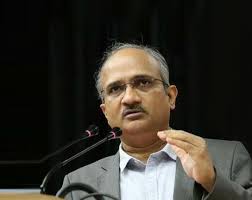
India is certainly trying to address some of the structural issues and bureaucracy that plague our higher education and research system. I do see discussions happening at the highest levels, which is a good sign.
While we are critically identifying these challenges, there is a deeper problem.
Much of academia is still not working on problems that matter to anyone outside academic circles.
In the absence of sustained engagement with line ministries, industry, and strategic agencies, many researchers end up working on problems picked from the literature rather than from national need, industrial demand, or societal challenge. India needs institutional mechanisms that bring talent, real problem statements, and funding together in one place.
We have seen glimpses of what such alignment can look like. The hashtag#IMPRINT programme, launched in 2015 by Hon'ble PM, standing for Impacting Research Innovation and Technology, was one such example by MINISTRY OF EDUCATION, GOVERNMENT OF INDIA. It tried to push research in areas of national relevance through closer coordination between academia and ministries. But such efforts often depend too much on individuals. Once secretaries or key officials change, momentum gets lost.
Nationally important research cannot depend on administrative continuity. It needs durable institutional architecture.
There are also examples at the institutional level. The Joint Advanced Technology Centre, or JATC, at IIT Delhi, created with the Defence Research and Development Organisation (DRDO) during my time as Director, is one such model. I saw first hand how such platforms enable academia to engage in directed research on technologies that matter to the country.
We are trying to build similar pathways at BITS Pilani.
Our PhD IMPACT programme is built around industry mentored PhD work, where problem statements come from the workplace and research is jointly guided by faculty and industry scientists. Centres such as CREST (BITS Pilani) and CRENS are also attempts to build platforms where academic capability can align with strategically important sectors for India. We are seeing a good traction on all these efforts.
India now needs to do this at scale.
We must move from individual faculty members chasing grants and publications to a system where the country’s hardest problems are translated into research missions, backed by sustained funding and institutional ownership.
Unless talent, problem statements, and funding are brought together systematically through structured pathways, we will continue to produce islands of excellence without creating the national impact we are capable of...... Prof. V. Ramgopal Rao, Group Vice-Chancellor, BITS Pilani (Linkdin post, April 2026)

Online
 LibraBot